Improve Every Conversation by Knowing Your Communication Style
Start the Test
Communication Styles Quiz: Explore the 4 Different Types
 Communication Styles: A Complete Guide to Understanding and Benefiting
New Updates

Discover Your Pattern: an In‑Depth Guide to Communication Style Quiz
What Makes a Communication Style Assessment Valuable Today
Modern workplaces and relationships thrive when signals are clear, empathy is present, and...

Communication Style Assessment: from Signals to Strategy
Why Understanding Your Style Unlocks Tangible Performance Gains
Modern organizations rise and fall on the clarity of their interactions. Teams often...

The Complete Guide to Communication Testing: Methods, Benefits, and Real-World Use
What Communication Testing Actually Measures
Across organizations and relationships, conversations either accelerate progress or quietly derail it. A...
Take Communication Styles Quiz
Get StartedDiscover the 4 Types of Communication Styles With Our Quiz & Assessment
Every conversation you hold leans on a recognizable pattern, even when it feels spontaneous and effortless. These patterns shape who speaks first, how meaning is negotiated, and how conflict gets resolved or escalated during dialogue. Rather than treating them as rigid labels, think of them as flexible lenses you can adjust depending on goals, audience, and context. Practitioners frequently compare communication styles to predict conversational flow, anticipate friction points, and create shared understanding. The value is not in boxing people in, but in providing a vocabulary for noticing what helps and what hinders mutual clarity. When teams align on a common language for interaction, they can de-personalize feedback and make collaboration more constructive.
Across cultures and teams you’ll notice striking variety, from concise and direct approaches to narrative-rich and relational ones. Researchers often map that variety into clusters, sometimes referring to different styles of communication when examining cross-cultural dynamics and leader–follower fit. If you understand your own tendencies alongside your partner’s tendencies, you can adapt tone, pacing, and medium to land messages with precision. Beyond labels, the most effective communicators scan the room for audience cues and adjust the dials accordingly. That adaptive mindset makes room for nuanced needs, including technology choices, timing, and emotional bandwidth. Professionals who calibrate messaging to align with communication preferences typically reduce misunderstandings and strengthen trust over time.

Benefits, Outcomes, and Measurable Gains
Organizations don’t improve simply by naming interaction patterns; they improve by intentionally designing meetings, feedback loops, and norms around them. When a clear purpose and outcome are set before speaking, conversations become shorter, decisions accelerate, and accountability rises. Teams that reflect on conversational dynamics after key moments learn faster than those that leave results to chance.
Leaders often coach individuals to recognize how a default pattern shapes perception, influence, and decision quality. As self-awareness rises, people can deliberately shift tone to match context without losing authenticity, which fuels credibility and rapport. Professionals who study their signature way of relating often refine a distinctive voice that remains flexible while honoring core values tied to their evolving communication style identity. HR partners and enablement teams commonly expand playbooks to address cross-functional handoffs, manager one-on-ones, and hybrid collaboration. Analysts sometimes categorize trend reports under headers such as communication styles workplace to spotlight adoption barriers and inclusion gaps across departments. By connecting behavior patterns with metrics like time to decision, sentiment, and retention, companies pinpoint where a small conversational shift can unlock outsized value.
- Clarify intent before you speak to reduce ambiguity and rework.
- Match medium to message to prevent channel fatigue and overload.
- Use structured turn-taking to ensure equitable participation.
- Summarize agreements and next steps to strengthen follow-through.
- Review outcomes in short retros to reinforce continuous learning.
Core Categories, Frameworks, and a Comparative Snapshot
Most field guides cluster behavioral cues into a few recognizable families so practitioners can quickly diagnose and adapt. No single taxonomy captures every nuance, but a shared map helps teams spot blind spots and codify better habits faster. The goal is to use heuristics as starting points, then update them with evidence from your own environment.
Educators often teach four canonical groupings, and many curricula describe the 4 types of communication styles as baseline patterns for everyday collaboration. While real humans are more fluid than categories, these reference points simplify coaching moments and foster a common vocabulary. With that foundation, colleagues can negotiate norms and design meetings that play to everyone’s strengths.
| Pattern | Hallmarks | Risks | Helpful Moves |
|---|---|---|---|
| Assertive | Clear asks, respectful boundaries, balanced listening | Overconfidence may mute quieter voices | Invite dissent, check for understanding, timebox talk |
| Passive | High harmony, low interruption, deferential tone | Unspoken needs, unclear commitments, hidden frustration | Practice concise requests, confirm decisions, escalate early |
| Aggressive | Fast pace, strong directives, decisive pushes | Psychological safety drops, information shuts down | Ask open questions, slow down, acknowledge feelings |
| Passive‑Aggressive | Indirect signals, sarcasm, delayed compliance | Mistrust, circular conflicts, missed deadlines | Surface issues explicitly, set norms, create feedback lanes |
Taxonomy names vary across schools, and some references simply label categories as types communication styles to streamline classification in training decks. Whether you adopt those labels or adjust language for your culture, the point is to make the invisible visible. Once patterns are visible, teams can experiment with explicit norms and measure the impact.
Beyond the basic clusters, distributed teams often design hybrid norms to handle time zones, tools, and cultural differences. Practitioners also write about different communication styles when analyzing how virtual settings change turn-taking and interruption patterns. This is where facilitation and meeting structure carry outsized weight, because logistics can either amplify or dilute voices.
Discovering Your Profile and Measuring Progress
Self-knowledge grows when you observe real moments, not just ideals, so keep a lightweight log of high-stakes interactions. After each meeting, jot what you said, how others responded, and what you would try differently next time. Reflection transforms fuzzy impressions into actionable insights, especially when paired with structured tools. Many teams use reflective worksheets or brief diagnostics, and people sometimes start with a quick communication style quiz to establish baseline tendencies. The value multiplies when you compare results with a colleague who knows your behavior in real settings. Together, you can explore where your default approach serves you and where it holds you back.
For broader team checks, some leaders prefer a cohort‑based pulse that includes a short communication styles quiz during onboarding or role transitions. The aim is not to grade personalities, but to align norms for meetings, feedback, and conflict navigation. When insights turn into explicit agreements, coordination friction drops and outcomes improve. Coaching programs frequently add debriefs and 360s, sometimes framing the process as a communication style assessment that blends self-report with peer input. When supported by clear goals and follow-up actions, those insights translate into skill growth rather than static labels. Over time, you’ll see smoother collaboration and more confident decision-making.
- Capture one strength and one growth area after significant conversations.
- Ask a trusted peer for a brief observation about your listening patterns.
- Pilot a small behavioral tweak for one week, then review results.
- Tie one improvement metric to each recurring meeting you lead.
Applying the Insights in Team Settings
Real impact shows up when norms change how people plan, speak, and decide together. Leaders who make turn-taking explicit, clarify decision rights, and standardize message formats create conditions where more voices can contribute meaningfully. In hybrid and global teams, those structures become the backbone of healthy collaboration. Managers refining playbooks for standups, pipeline reviews, and design critiques often study how patterns shift under pressure. Case studies and field notes sometimes organize examples under phrases like communication styles at work to make patterns easier to share across departments. A simple tweak, like rotating facilitators or using silent writing, can raise inclusion and accelerate alignment.
When goals are clear and psychological safety is guarded, momentum builds faster than raw effort alone. Teams that intentionally practice listening, summarizing, and respectful challenge typically see fewer do-overs and stronger commitments. Practitioners highlight these gains when discussing effective communication styles in the context of high-stakes projects and cross-functional initiatives.
- Write agendas with owners, decisions, and timeboxes to prevent drift.
- Use brief summaries to capture agreements and track follow-through.
- Adopt visual signals in virtual rooms to balance contributions.
- Schedule short debriefs to convert outcomes into better habits.
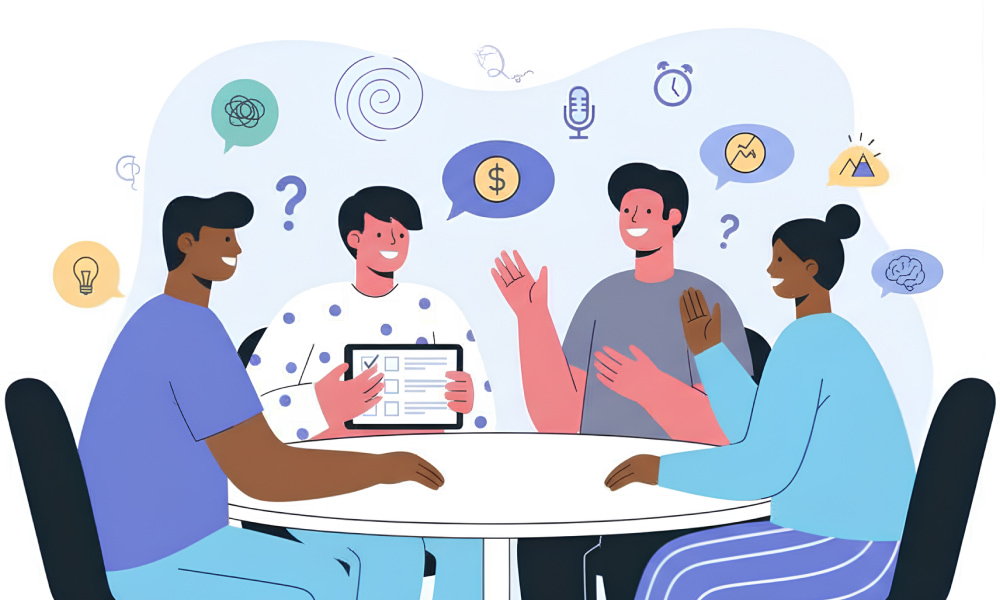
Handling Tough Patterns and Building Skills
Even healthy teams encounter moments when indirectness, sarcasm, or delayed compliance creep into the mix. Those signals point to unmet needs, unclear expectations, or unspoken conflicts that need daylight and process. Surfacing issues early with curiosity and firm boundaries restores momentum without shaming anyone involved.
Facilitators often prepare scripts for sensitive dialogues because early wording choices can set the tone for resolution. Clear expectations, shared norms, and empathetic curiosity help defuse the friction that defines a passive-aggressive communication style in team settings. When the problem behavior is named and boundaries are explicit, trust and speed return quickly.
Skill growth compounds when practice is systematic and feedback is timely, not just annual or ad hoc. Managers can scaffold progress with role-plays, peer coaching, and short habit sprints that target one behavior at a time. Many organizations sustain momentum by sponsoring structured cohorts focused on communication style training tailored to real workflows and scenarios.
- Rehearse critical conversations with a peer before high-stakes moments.
- Record and review short clips to spot listening gaps and filler habits.
- Set micro-goals per meeting, such as asking two clarifying questions.
- Use checklists to close sessions with decisions, owners, and timelines.
Take Communication Styles Quiz
Get StartedFrequently Asked Questions
-
How do I avoid stereotyping when using labels?
Use labels as hypotheses, not verdicts. Treat them like a map that helps you notice tendencies while staying open to exceptions. Ask permission before applying a label to someone else, and always pair observations with curiosity. The moment a label stops generating helpful options, drop it and return to evidence from the specific situation in front of you.
-
What’s the fastest way to improve my next meeting?
Define the decision you want, list two or three inputs you actually need, and allocate speaking time intentionally. Open with context, gather facts, surface risks, and close with owners and timelines. A crisp structure beats charisma, and a clear outcome beats a long discussion every time.
-
How do culture and language affect interactions?
Culture shapes pace, directness, body language, and expectations about hierarchy. When in doubt, slow down, check for understanding, and respect silence as thinking time. Ask participants about preferred norms for feedback, disagreement, and follow-ups, then codify them so newcomers can adapt quickly.
-
How can I navigate conflict without escalation?
Separate people from problems by naming the shared objective first. Ask open questions, reflect on what you heard, and propose options with trade-offs. If emotions run high, take a short pause, recap progress, and agree on the smallest next step that moves everyone forward.
-
What metrics show that my efforts are working?
Track time-to-decision, rework due to misalignment, sentiment in pulse surveys, and participation equity in meetings. Pair quantitative indicators with qualitative notes from retrospectives. Improvements in clarity, psychological safety, and cycle time are strong signs that your new habits are paying off